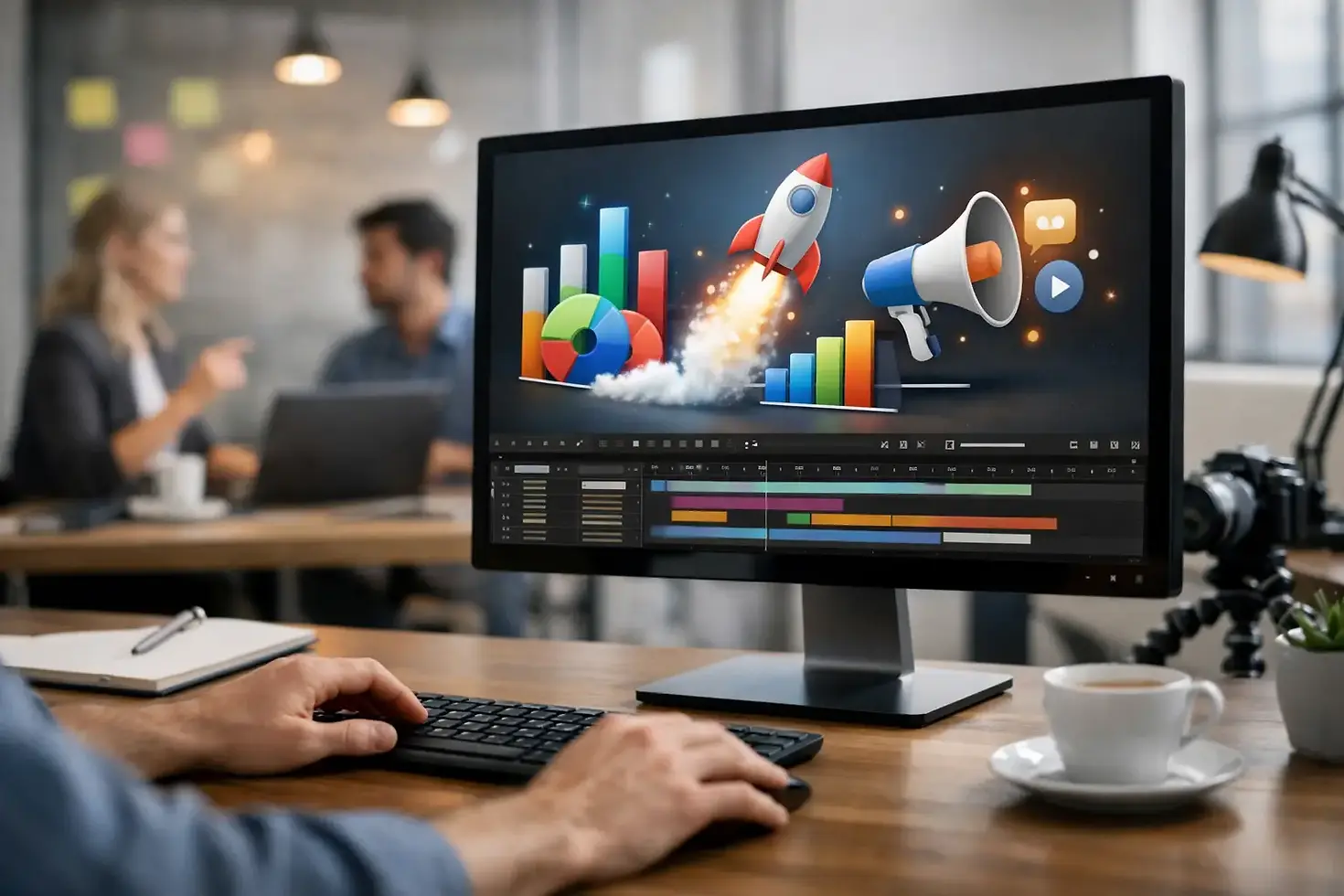
Motion Graphics for Business Marketing Works
A static post has about a second to earn attention. A homepage hero has even less. That is why motion graphics for business marketing have moved from a nice extra to a serious growth tool. When the right message, design, and movement work together, brands do not just look more polished - they become easier to understand, easier to remember, and easier to trust.
For founders, marketing teams, and brand leaders, that matters because attention is expensive. You can spend on traffic, social ads, email campaigns, and sales outreach, but if your creative does not communicate quickly, performance stalls. Motion gives your brand a way to show value instead of only describing it.
Why motion graphics for business marketing perform so well
Motion graphics sit in a sweet spot between design and storytelling. They are more dynamic than a static graphic, but often more efficient and flexible than a full live-action video shoot. That makes them especially useful for businesses that need strong content across multiple channels without reinventing the wheel every time.
The real strength is clarity. A moving icon, an animated headline, or a short product sequence can explain a concept in a few seconds that might take a paragraph to spell out. If your offer is complex, technical, or new to the market, that speed matters. People are far more likely to stay engaged when the content helps them understand the point quickly.
They also create a stronger brand impression. Good motion is not random movement. It reflects how your brand behaves. A luxury brand may use restrained transitions and elegant pacing. A startup may use energetic cuts, bold type animation, and brighter color shifts. The motion itself becomes part of your identity.
That said, motion is not magic. If your messaging is unclear or your design system is inconsistent, animation will only make those issues move faster. The best results come when strategy, copy, and visual identity are already aligned.
Where motion graphics make the biggest impact
Businesses sometimes assume motion graphics belong only in social media ads. They can work there, but that is a narrow view. The strongest brands use motion across the customer journey.
On websites, motion can improve first impressions and guide attention. A homepage banner with subtle animation can make a brand feel current and premium. Short explainer loops can show how a service works without forcing users to read blocks of text. The key is restraint. If motion slows load times or distracts from conversion paths, it becomes a liability.
In paid advertising, motion often improves stop power. People scroll quickly, especially on mobile. A strong opening frame with immediate movement can help your ad earn a second look. But attention alone is not enough. The best ad creative moves viewers toward a single idea, whether that is a product benefit, an offer, or a reason to trust your brand.
For social media, motion graphics help brands stay visually consistent while keeping content fresh. Instead of designing every post from scratch, you can build a motion system with repeatable templates for launches, tips, testimonials, event promos, and announcements. That approach saves time and strengthens recognition.
Sales and internal communication are often overlooked opportunities. Animated pitch deck elements, trade show screens, presentation openers, recruiting materials, and brand training content can all benefit from motion. When teams understand the brand more clearly, they represent it more consistently.
What effective motion graphics actually include
A lot of business content fails because it treats motion as decoration. Effective motion graphics start with a purpose. Are you trying to explain, persuade, launch, educate, or build recall? The creative decisions should follow that goal.
The strongest pieces usually combine a few essential ingredients: clear messaging, disciplined pacing, a recognizable visual system, and movement that supports the idea instead of distracting from it. Typography matters. Color matters. Sound design can help, but only if the piece still works without audio, especially for social platforms where many users watch muted.
Length depends on the channel. A six-second ad needs a different structure than a 60-second brand explainer. Short-form motion should get to the point immediately. Longer pieces can build a narrative, but they still need momentum. If viewers have to wait too long for the payoff, they leave.
There is also a difference between polished and overproduced. Some brands benefit from highly refined animation with layered transitions and cinematic timing. Others perform better with simpler, cleaner motion that feels direct and modern. It depends on the audience, the platform, and the brand position.
Common mistakes businesses make
The most common mistake is starting with animation before nailing the message. If the script is weak, the motion team ends up trying to solve a strategy problem visually. That usually leads to busy work, not better communication.
Another issue is inconsistency. A business invests in one strong animated piece, then follows it with unrelated visuals across email, social, web, and presentation materials. The result is fragmented brand perception. Motion works best when it belongs to a larger system, not as a one-off experiment.
Some brands also confuse movement with energy. Fast cuts, flashy transitions, and constant animation can feel exciting for a moment, but they can also cheapen a premium brand or overwhelm the viewer. Motion should feel intentional. If everything moves, nothing stands out.
Budget misalignment is another real factor. Not every campaign needs custom 3D animation or a full production team. In many cases, smart 2D motion graphics built from an existing brand system will deliver stronger ROI because they are faster to produce, easier to adapt, and more practical for ongoing use.
How to decide what your business needs
If you are considering motion graphics for business marketing, start with the business objective, not the format. Ask where communication is currently breaking down. Are prospects confused about your offer? Is your social content being ignored? Does your website feel flat compared to your competitors? Are your sales materials underwhelming in high-stakes meetings?
From there, identify where motion can create the most leverage. Sometimes the answer is a short brand reel for your homepage and presentations. Sometimes it is a set of social ad assets. Sometimes it is an explainer video that helps sales teams close faster. The right choice depends on where attention, understanding, or conversion is weakest.
This is also where a creative partner matters. A good agency does not just ask what style you like. It asks what outcome you need, what channels matter most, what assets already exist, and how the motion work will connect with the rest of your brand. That is the difference between buying animation and building a smarter marketing system.
Measuring whether it is working
Creative should look great, but business performance is the real test. Depending on the channel, that may mean stronger watch time, higher click-through rates, lower bounce rates, better landing page engagement, improved conversion rates, or stronger brand recall in campaigns.
Some gains are immediate and measurable. Others show up over time through a more cohesive brand presence. If your motion assets make your website feel more credible, your ad creative more memorable, and your presentations more persuasive, the value compounds. One well-built motion system can support months of marketing activity.
That is one reason agencies like FIT Design treat motion as part of the broader brand picture. It is not just about making content move. It is about helping brands communicate with more confidence, more clarity, and more commercial impact.
The businesses that benefit most
Not every company needs motion at the same level, but many can benefit from it. Startups often use motion to explain a new concept quickly and look more established while they scale. Small businesses use it to compete with bigger players through sharper creative. Established brands use it to refresh stale assets, modernize perception, and bring consistency across departments and campaigns.
The strongest fit tends to be businesses with something meaningful to explain or a strong reason to stand out. If your category is crowded, motion can sharpen differentiation. If your service is abstract, motion can make it concrete. If your brand feels outdated, motion can signal forward movement without requiring a full reinvention.
What matters most is not whether motion is trendy. It is whether it helps your audience understand and trust you faster. When it does, it becomes more than content. It becomes a business asset that keeps working across channels, teams, and stages of growth.
The right motion does not just catch the eye. It gives your brand momentum, and momentum is a very good place to grow from.


Comments